Forget the latest supplement stack. The most transformative thing you can do for your body this year involves nothing more than heat, stillness, and sweat.
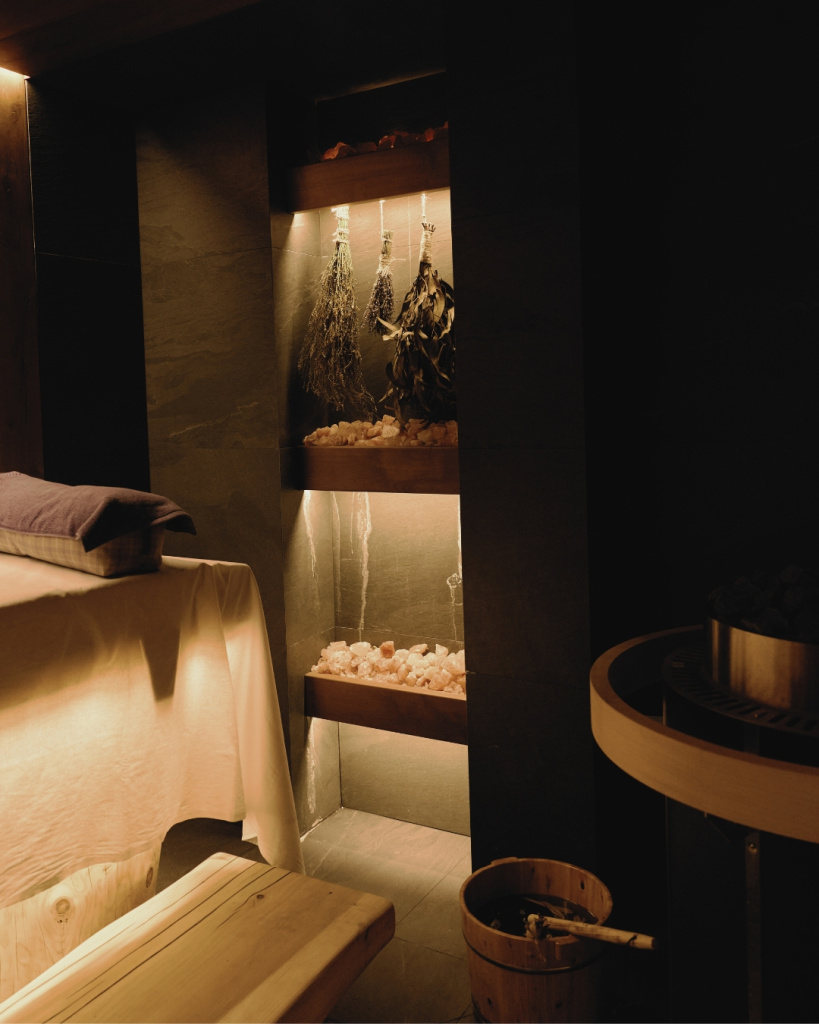
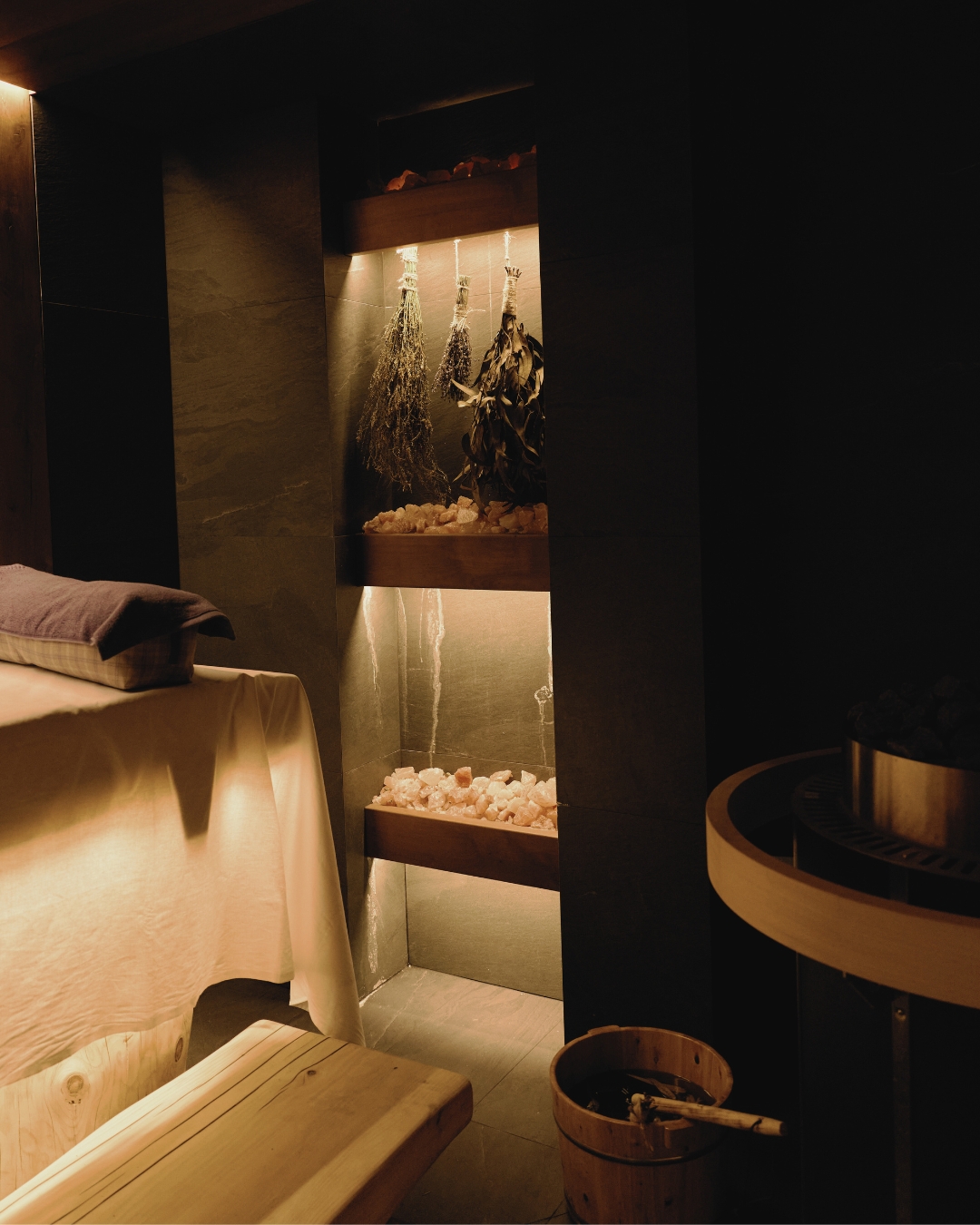
There is something almost embarrassingly simple about it. No wearable tech. No proprietary super-vitamin blend. No twelve-step protocol. You walk into a hot room. You sit down. You let the heat do what heat has always done.
And yet, across every civilisation that has ever existed — from the birch forests of Finland to the volcanic springs of Hakone — humans have kept returning to this one, elemental act. They built temples around it. They wove it into religion, medicine, and social life. They understood, long before any peer-reviewed journal confirmed it, that heat changes the body at a level nothing else quite reaches.
Now the science has arrived. And it's saying exactly what tradition always knew.
The Body Under Heat
The moment you enter a sauna, your physiology shifts. Heart rate climbs to 100–150 beats per minute — comparable to a brisk walk or moderate cycle. Blood vessels open. Circulation surges toward the skin. Core temperature rises, and with it, a cascade of protective stress responses that researchers call hormesis: the body's elegant way of growing stronger through carefully dosed challenge.
The data is striking. A landmark Finnish study tracking over 2,300 men across two decades found that those who used a sauna four to seven times per week had a 50% lower risk of fatal cardiovascular disease and a 66% lower risk of dementia — compared to those who went just once. Further analysis in the Mayo Clinic Proceedings confirmed associations with reduced hypertension, improved vascular function, and lower overall mortality.
A 2022 clinical trial added another layer: participants who spent just 15 minutes in a sauna after exercise saw greater gains in fitness, blood pressure, and cholesterol than those who exercised alone. Heat, it turns out, doesn't just complement a wellness routine. It amplifies it.
And then there are the quieter benefits — the ones that don't make headlines but reshape how you feel day to day. Lower cortisol. Deeper sleep. Less chronic pain. A gentler nervous system. The kind of shifts that accumulate slowly and then, one morning, you simply notice you feel different.
Five Cultures, One Truth
What elevates heat therapy from trend to something genuinely timeless is its universality. These traditions didn't borrow from one another. They emerged independently — and arrived at the same conclusion.
Finland made the sauna a birthright. With 3.3 million saunas for 5.5 million people, the practice is less a luxury than a daily grammar — dry heat, steam rising from stones, a plunge into frozen water, and the kind of silence that borders on sacred.
Russia made it a way of life. The banya (баня) is as culturally embedded as the Finnish sauna — a ritual of birch whisks, herbal steam, ice-cold plunges, and hours of gathering with friends and family over tea between rounds. Equal parts wellness practice and social institution.
Japan refined it into meditation. The onsen — fed by mineral-rich geothermal springs — is an exercise in purification and presence. You wash before you enter. You soak in silence. The ritual is the point.
Turkey made it a ritual of purification. Hammam means "spreader of warmth" in Arabic. Rooted in Ottoman tradition, it blended spiritual cleansing with steam, marble, and exfoliation — a ceremony of renewal open to all.
Korea reimagined it entirely. The jjimjilbang is a sprawling, multi-room thermal world — jade rooms, salt caves, ice chambers — designed not for a quick session but for an entire day of restoration.
Different aesthetics. Different philosophies. The same biological truth: controlled heat, followed by cooling, recalibrates the body in ways we are only beginning to fully map.
The Simplest Prescription
Current evidence suggests starting with 2–3 sessions per week, each lasting 10 to 15 minutes, and building from there. The strongest research points to greater benefits at higher frequency — a landmark 20-year Finnish study found that those who used a sauna 4–7 times per week, for 15 to 20 minutes per session, had the most significant reductions in cardiovascular risk and overall mortality (Laukkanen et al., JAMA Internal Medicine, 2015). No optimisation required. No performance metrics. Just warmth, consistency, and the willingness to sit still inside it.
In an era that rewards complexity — more data, more inputs, more interventions — there is something radical about a practice that asks for nothing but your presence. No screen. No stimulation. Just the ancient, unhurried intelligence of heat moving through the body, doing what it has always done.
Every civilisation found its way here. Perhaps it's time you did, too.
Forget an apple a day — a sauna session a day keeps the doctor away.
Book your session — and step into a tradition older than medicine itself.
References: Laukkanen et al., JAMA Internal Medicine, 2015 · Laukkanen et al., Age and Ageing, 2017 · Hussain & Cohen, Mayo Clinic Proceedings, 2018 · Gryka et al., Int. J. Environmental Research and Public Health, 2022 · Pilch et al., Biology of Sport, 2013 · Masuda et al., Psychosomatic Medicine, 2005.
There is something almost embarrassingly simple about it. No wearable tech. No proprietary super-vitamin blend. No twelve-step protocol. You walk into a hot room. You sit down. You let the heat do what heat has always done.
And yet, across every civilisation that has ever existed — from the birch forests of Finland to the volcanic springs of Hakone — humans have kept returning to this one, elemental act. They built temples around it. They wove it into religion, medicine, and social life. They understood, long before any peer-reviewed journal confirmed it, that heat changes the body at a level nothing else quite reaches.
Now the science has arrived. And it's saying exactly what tradition always knew.
The Body Under Heat
The moment you enter a sauna, your physiology shifts. Heart rate climbs to 100–150 beats per minute — comparable to a brisk walk or moderate cycle. Blood vessels open. Circulation surges toward the skin. Core temperature rises, and with it, a cascade of protective stress responses that researchers call hormesis: the body's elegant way of growing stronger through carefully dosed challenge.
The data is striking. A landmark Finnish study tracking over 2,300 men across two decades found that those who used a sauna four to seven times per week had a 50% lower risk of fatal cardiovascular disease and a 66% lower risk of dementia — compared to those who went just once. Further analysis in the Mayo Clinic Proceedings confirmed associations with reduced hypertension, improved vascular function, and lower overall mortality.
A 2022 clinical trial added another layer: participants who spent just 15 minutes in a sauna after exercise saw greater gains in fitness, blood pressure, and cholesterol than those who exercised alone. Heat, it turns out, doesn't just complement a wellness routine. It amplifies it.
And then there are the quieter benefits — the ones that don't make headlines but reshape how you feel day to day. Lower cortisol. Deeper sleep. Less chronic pain. A gentler nervous system. The kind of shifts that accumulate slowly and then, one morning, you simply notice you feel different.
Five Cultures, One Truth
What elevates heat therapy from trend to something genuinely timeless is its universality. These traditions didn't borrow from one another. They emerged independently — and arrived at the same conclusion.
Finland made the sauna a birthright. With 3.3 million saunas for 5.5 million people, the practice is less a luxury than a daily grammar — dry heat, steam rising from stones, a plunge into frozen water, and the kind of silence that borders on sacred.
Russia made it a way of life. The banya (баня) is as culturally embedded as the Finnish sauna — a ritual of birch whisks, herbal steam, ice-cold plunges, and hours of gathering with friends and family over tea between rounds. Equal parts wellness practice and social institution.
Japan refined it into meditation. The onsen — fed by mineral-rich geothermal springs — is an exercise in purification and presence. You wash before you enter. You soak in silence. The ritual is the point.
Turkey made it a ritual of purification. Hammam means "spreader of warmth" in Arabic. Rooted in Ottoman tradition, it blended spiritual cleansing with steam, marble, and exfoliation — a ceremony of renewal open to all.
Korea reimagined it entirely. The jjimjilbang is a sprawling, multi-room thermal world — jade rooms, salt caves, ice chambers — designed not for a quick session but for an entire day of restoration.
Different aesthetics. Different philosophies. The same biological truth: controlled heat, followed by cooling, recalibrates the body in ways we are only beginning to fully map.
The Simplest Prescription
Current evidence suggests starting with 2–3 sessions per week, each lasting 10 to 15 minutes, and building from there. The strongest research points to greater benefits at higher frequency — a landmark 20-year Finnish study found that those who used a sauna 4–7 times per week, for 15 to 20 minutes per session, had the most significant reductions in cardiovascular risk and overall mortality (Laukkanen et al., JAMA Internal Medicine, 2015). No optimisation required. No performance metrics. Just warmth, consistency, and the willingness to sit still inside it.
In an era that rewards complexity — more data, more inputs, more interventions — there is something radical about a practice that asks for nothing but your presence. No screen. No stimulation. Just the ancient, unhurried intelligence of heat moving through the body, doing what it has always done.
Every civilisation found its way here. Perhaps it's time you did, too.
Forget an apple a day — a sauna session a day keeps the doctor away.
Book your session — and step into a tradition older than medicine itself.
References: Laukkanen et al., JAMA Internal Medicine, 2015 · Laukkanen et al., Age and Ageing, 2017 · Hussain & Cohen, Mayo Clinic Proceedings, 2018 · Gryka et al., Int. J. Environmental Research and Public Health, 2022 · Pilch et al., Biology of Sport, 2013 · Masuda et al., Psychosomatic Medicine, 2005.